Biometric Access Control Systems
Biometric Access Control uses fingerprints or facial recognition to verify identity before granting access. Unlike cards, fobs or PIN codes, biometric credentials cannot easily be lost, copied or shared, making them ideal for organisations that require enhanced security and accountability.
Biometric access control systems use unique physical characteristics such as fingerprints or facial features to verify identity and control access to buildings, rooms and secure areas.
By replacing traditional keys, fobs and access codes, biometric systems provide an additional layer of security whilst improving convenience, accountability and auditability.
Based in Bolton, i Security designs, installs and supports biometric access control systems for schools, manufacturers, commercial organisations and public-sector premises throughout Greater Manchester and Lancashire.
What Is Biometric Access Control?
Biometric readers identify individuals using unique characteristics that are difficult to copy, share or lose. Unlike traditional credentials such as keys, cards or PIN numbers, biometric credentials are linked directly to the authorised user.
Access permissions can be tailored according to:
- Job role
- Department
- Working hours and shift patterns
- Security clearance levels
- Individual responsibilities
This enables organisations to control access with a high level of accuracy whilst maintaining a complete audit trail of activity.
Why Choose Biometric Readers?
Traditional access credentials can be lost, stolen, copied or shared with other individuals. Biometric systems remove many of these risks by linking access directly to the authorised user.
Benefits include:
- No lost or stolen access cards
- No shared PIN codes
- Enhanced site security
- Improved accountability
- Faster user authentication
- Reduced administration
Biometric readers are particularly useful in environments where access to sensitive areas must be tightly controlled.
Biometric Access Control vs Fobs & Access Cards
Traditional access cards and fobs remain a popular and cost-effective solution for many organisations. However, cards can be lost, stolen, shared or duplicated.
Biometric readers authenticate the individual rather than the credential, providing greater assurance that the authorised person is the one gaining access.
For organisations where accountability and identity verification are particularly important, biometric solutions can provide additional confidence and security.
Are Biometric Systems More Secure?
For many organisations, biometric authentication provides an additional layer of security because users cannot simply lend a card, share a code or pass credentials to another person.
This can be particularly valuable where access to secure, restricted or high-value areas must be limited to authorised personnel.
Biometric solutions can also strengthen staff time and attendance reporting by helping to reduce “buddy punching” or clock-in fraud.
Facial Recognition or Fingerprint – Which Is Best?
The most suitable biometric technology will depend on your environment, operational requirements and user experience objectives.
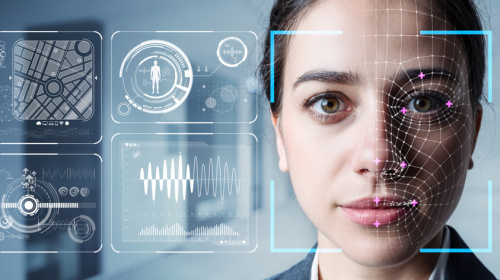
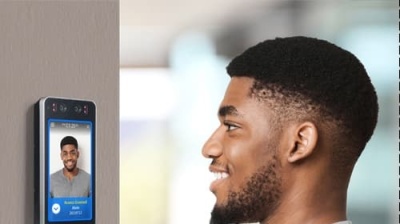
Facial Recognition Access Control
Facial recognition technology has become increasingly popular due to significant improvements in speed and accuracy.
Benefits include:
- Fast and contactless identification
- Excellent user convenience
- High recognition accuracy
- Reduced queuing at entry points
- Suitable for high-traffic environments
In some applications, users can be identified and granted access without needing to stop at the reader.
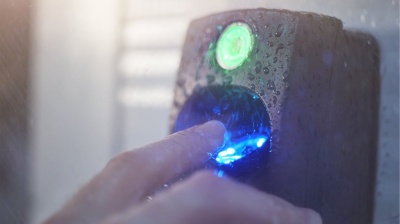
Fingerprint Access Control
Fingerprint readers remain one of the most widely deployed biometric technologies and have a long track record of reliability.
Benefits include:
- Proven technology
- Excellent accuracy
- Reliable operation in demanding environments
- Suitable for indoor and outdoor deployment
- Well suited to smaller user groups
For many organisations, fingerprint readers continue to provide an excellent balance of reliability, security and cost-effectiveness.
Biometric Access Control & Data Protection
One of the most common questions organisations ask is whether biometric access control systems can be used in a privacy-conscious and compliant manner.
Modern biometric platforms do not usually store an image of a person’s fingerprint or face. Instead, they typically use encrypted biometric templates for identification and verification purposes.
Before deploying biometric technology, organisations should assess their operational requirements, legal obligations and data protection responsibilities to ensure that any solution remains appropriate for its intended use.
We can assist clients in understanding how biometric systems fit into their wider security, operational and compliance requirements.
Common Applications for Biometric Access Control
Biometric access control systems are commonly used in:
- Schools and colleges
- Commercial offices
- Food manufacturing facilities
- Healthcare environments
- Data and communications rooms
- Restricted production areas
- Research and development facilities
- Secure storage and management areas
These environments often require enhanced identity verification, accountability and control over access permissions.
Biometric Time & Attendance Systems
Biometric readers can also form part of a wider staff time and attendance solution.
Integrated systems can help organisations:
- Monitor staff attendance
- Reduce clock-in fraud
- Manage absence reporting
- Track shift patterns
- Integrate with payroll and HR systems
We provide solutions suitable for organisations of all sizes, including integration with payroll systems and employee self-service applications.
Why Choose i Security?
At i Security, we combine access control expertise with a strong background in networking, systems integration and compliance.
This allows us to design biometric solutions that integrate seamlessly with CCTV, visitor management, HR software, time and attendance platforms, fire alarm systems and wider security infrastructure.
Our approach is always focused on understanding your operational requirements first and then identifying the most appropriate technology to achieve your objectives.
Frequently Asked Questions
Can biometric readers replace access cards and fobs?
Yes. Many systems can operate solely using biometrics or combine biometric authentication with cards, fobs or PINs for additional security.
Are biometric systems suitable for schools?
Biometric systems can be used in educational environments where appropriate policies, procedures and data protection considerations have been assessed.
Can biometric readers work with existing access control systems?
In many cases, biometric readers can be integrated with existing access control infrastructure, subject to compatibility and site requirements.
Can biometric systems integrate with time and attendance software?
Yes. Many biometric platforms provide integration with time and attendance, payroll and HR systems.
Related Access Control Solutions
- /access-control-systems-bolton/Access Control Systems
- /school-access-control/School Access Control
- /workplace-access-control/Workplace Access Control
- /staff-visitor-management/Staff & Visitor Management
Need Advice on Biometric Access Control?
If you’re considering facial recognition, fingerprint readers or a complete biometric access control solution, our specialists can help you identify the most appropriate approach for your environment.
Contact Us to arrange a consultation.