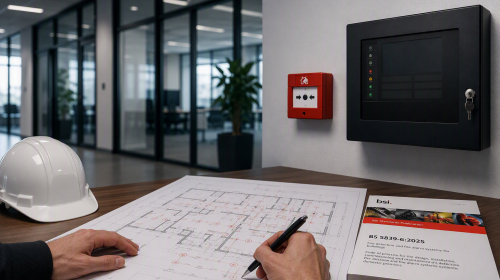
Fire Alarm Design Reviews & Detection Strategy Assessments
Fire alarm systems should not simply be maintained. They should also remain appropriate for the building, its occupancy, fire risks and operational requirements.
Many organisations assume that because a fire alarm system is functioning correctly, it remains suitable for the building. However, buildings change over time. Extensions are added, rooms are repurposed, ceilings are altered, equipment is installed and occupancy patterns evolve.
A fire alarm design review assesses whether the existing fire detection strategy remains aligned with the building’s current use, risks and objectives.
Based in Bolton, i Security provides fire alarm design reviews and detection strategy assessments for schools, commercial premises, manufacturing facilities, warehouses and public sector organisations throughout Greater Manchester, Lancashire and the surrounding areas.
What Is a Fire Alarm Design Review?
A fire alarm design review is an assessment of the existing fire detection and alarm strategy for a building.
The purpose is not to test whether detectors and sounders operate correctly. Routine maintenance and servicing already address this.
Instead, a design review considers whether the original detection strategy remains appropriate for the building as it exists today.
Typical review areas include:
- Building layout and occupancy
- Changes in room use
- Building extensions
- Suspended ceilings and ceiling voids
- Roof alterations and rooftop installations
- Escape routes and circulation areas
- High-risk areas
- Property protection objectives
- Business continuity considerations
- Fire alarm category suitability
Why Consider a Fire Alarm Design Review?
Many buildings undergo significant alterations during their lifespan.
These changes may affect how smoke and heat move through the building, how quickly a fire may be detected and whether the existing fire detection coverage remains appropriate.
Common reasons for a review include:
- Building refurbishments
- Office reconfiguration projects
- School extensions
- Warehouse alterations
- Introduction of new manufacturing equipment
- Changes in occupancy levels
- Roof works and rooftop infrastructure
- Fire risk assessment recommendations
- Business continuity concerns
- Acquisition of an existing property
Has Your Building Changed Since the Fire Alarm Was Installed?
One of the most common assumptions is that a compliant fire alarm system will always remain suitable.
In reality, it is often the building that changes rather than the fire alarm system.
Examples include:
- Additional partition walls
- New meeting rooms or offices
- Storage areas converted to alternative uses
- Installation of suspended ceilings
- Changes to escape routes
- Roof-mounted plant or solar installations
- Warehouse racking alterations
- Production line changes
Whilst the fire alarm system itself may remain operational, these changes can affect the effectiveness of the original detection strategy.
Fire Alarm Categories & System Objectives
Different buildings require different levels of protection depending on their use and risk profile.
A design review can help determine whether the existing fire alarm category continues to reflect the objectives of the building.
This may include consideration of:
- Category M Systems
- Category L1 Systems
- Category L2 Systems
- Category L3 Systems
- Category L4 Systems
- Category L5 Systems
- Category P1 Systems
- Category P2 Systems
The review considers whether the current category remains appropriate or whether changes to the building suggest alternative fire detection arrangements should be considered.
Fire Alarm Design Reviews for Schools
Schools are rarely static environments.
New classrooms are added, temporary accommodation is installed, rooms change function and estate improvement projects take place regularly.
These changes may alter:
- Occupancy patterns
- Escape routes
- Detection requirements
- Building compartmentation
- Risk profiles
A fire alarm design review can help schools understand whether the existing fire detection strategy remains aligned with operational requirements and safeguarding responsibilities.
Fire Alarm Design Reviews for Manufacturing & Industrial Premises
Manufacturing facilities often undergo continual change as production processes evolve.
Factors that may influence fire detection requirements include:
- New machinery
- Production process changes
- Additional storage areas
- Warehouse alterations
- Changes in combustible materials
- Operational expansion projects
Understanding how these changes interact with the fire detection strategy is an important part of managing fire risk and business continuity.
Design Review vs Fire Alarm Servicing
Fire alarm servicing and fire alarm design reviews are often confused but serve different purposes.
A maintenance visit focuses on ensuring the installed fire alarm system operates correctly.
A design review considers whether the overall fire detection strategy remains suitable for the building and its current use.
Many organisations maintain their systems correctly but have never reviewed whether building alterations have changed the assumptions behind the original design.
Design Review vs Fire Risk Assessment
A fire risk assessment considers the wider fire safety arrangements within a building.
A fire alarm design review focuses specifically on the fire detection and alarm strategy.
The two processes complement each other and often identify opportunities to improve fire safety and organisational resilience.
Our Approach
We take a practical, evidence-based approach to fire alarm design reviews.
Our objective is not to recommend unnecessary upgrades. Instead, we assess the building, understand its operational requirements and identify whether the existing detection strategy continues to support the desired fire safety objectives.
Where improvements are appropriate, we can provide practical recommendations to help organisations make informed decisions.
Frequently Asked Questions
Does a fire alarm design review replace fire alarm servicing?
No. Routine servicing remains essential. A design review assesses the suitability of the fire detection strategy rather than the operational performance of individual devices.
Do building alterations affect fire alarm systems?
They can. Changes to building layouts, occupancy, room use and ceiling arrangements may affect detection coverage and system objectives.
Who should consider a fire alarm design review?
Schools, commercial premises, warehouses, manufacturing facilities and organisations that have altered or expanded their buildings are often suitable candidates.
Can an existing fire alarm system be upgraded rather than replaced?
In many cases, yes. The most appropriate solution depends on the findings of the review and the objectives of the organisation.
Need Advice on Your Fire Detection Strategy?
If your building has changed since the fire alarm system was originally installed, or you want independent advice on whether the current detection strategy remains appropriate, i Security can help.
Contact us to discuss a fire alarm design review and detection strategy assessment.