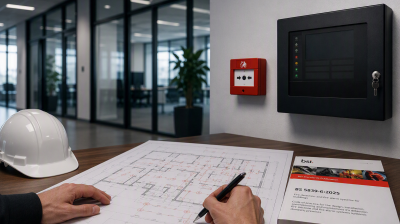
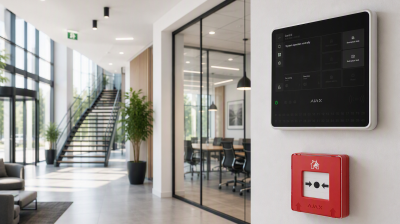
Fire alarm systems provide early warning of fire, helping protect life, property and business continuity. Designed and installed correctly, they form a vital part of a building’s overall fire safety strategy.
Whether you operate a school, office, warehouse, manufacturing facility or public building, a suitable fire alarm system can help occupants respond quickly to an emergency whilst supporting wider fire safety and compliance objectives.
Based in Bolton, i Security designs, installs and commissions fire alarm systems for commercial premises, schools, manufacturers and public-sector organisations throughout Greater Manchester, Lancashire and the surrounding areas.
A fire alarm system should be designed around the building, its occupancy, fire risks and operational requirements.
Whether you require a new system for a school, office, warehouse or manufacturing facility, i Security can provide professional fire alarm installation services tailored to your premises.
Learn more about Fire Alarm Installation
Life protection fire alarm systems are designed to provide the earliest practical warning of fire, giving building occupants time to respond and evacuate safely.
The level of protection required will depend on factors such as building layout, occupancy, sleeping risk, fire hazards and the findings of the fire risk assessment.
Premises may require enhanced fire detection where:
The primary objective of a life protection system is to provide sufficient warning to allow occupants to reach a place of safety.
Not all fire alarm systems are designed to achieve the same objective. The level of protection required will depend on the building, its occupancy, fire risks and the objectives identified through the fire risk assessment process.
Fire alarm systems are commonly designed to recognised categories for life protection and property protection purposes.
Common fire alarm categories include:
The most appropriate category will depend on the recommendations of the fire risk assessment, the building layout, occupancy profile and business continuity objectives.
Fire can have a significant impact on a business, even where no injuries occur. Property protection fire alarm systems are often used to support business continuity, protect assets and reduce the potential impact of fire-related incidents.
In some circumstances, insurers may require automatic fire detection and alarm systems as part of their risk management requirements.
Early fire detection may help organisations reduce:
For many organisations, an effective fire alarm system forms part of a wider business continuity and risk management strategy.
Fire safety legislation places responsibilities on organisations to assess and manage fire risks within their premises.
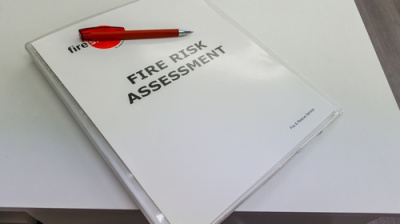
A suitable fire risk assessment helps identify fire hazards, people at risk and the fire safety measures that may be appropriate for the building.
The findings of a fire risk assessment, together with the building layout, occupancy and use of the premises, help determine the most appropriate fire detection and alarm arrangements.
Where recommendations identify improvements to fire alarm systems or fire detection coverage, i Security can provide practical advice and installation support.
Many commercial buildings evolve over time. Offices are reconfigured, schools expand, warehouses are altered and manufacturing facilities introduce new equipment or processes.
Whilst the fire alarm system may still operate correctly, the original fire detection strategy may no longer reflect how the building is used today.
Changes that can affect fire detection performance include:
Where significant building alterations have taken place, it may be appropriate to review whether the existing fire detection strategy continues to provide suitable coverage and early warning.
Our team can help assess existing systems and provide practical recommendations where upgrades, alterations or additional detection may be beneficial.
Schools and academies require reliable fire alarm systems that support safe evacuation whilst meeting the operational requirements of busy educational environments.
As schools expand, change layout or alter room use, it may become necessary to review fire detection coverage to ensure it remains appropriate.
i Security has extensive experience supporting schools with fire alarm installations, system upgrades and long-term maintenance.
Manufacturing facilities, food production sites, warehouses and industrial premises often present unique fire risks due to equipment, production processes, storage arrangements and operational activities.
These environments frequently require fire alarm systems that can provide reliable early warning whilst supporting business continuity and risk management objectives.
We work closely with organisations to understand their operational requirements and recommend practical fire alarm solutions for their environment.
Wireless fire alarm systems can provide a practical alternative where installing new cabling would be difficult, disruptive or costly.
Modern wireless fire alarm technology can be suitable for a wide range of commercial environments, allowing fire detection and alarm devices to communicate using secure wireless connections whilst maintaining the functionality expected from a modern fire detection system.
Wireless fire alarm systems are commonly considered for:
Wireless systems can often reduce installation disruption whilst still providing effective fire detection and alarm coverage. The suitability of a wireless solution will depend on the building, fire strategy and operational requirements.
Our team can advise whether a wired, wireless or hybrid fire alarm system is the most appropriate solution for your premises.
For some organisations, particularly those operating out of hours, maintaining business-critical operations or protecting high-value assets, fire alarm monitoring can provide an additional layer of protection.
Monitored fire alarm systems can be connected to an Alarm Receiving Centre (ARC) which receives alarm activations and manages response procedures in accordance with agreed arrangements.
Monitored fire alarm systems are commonly used within:
Monitoring can support property protection objectives whilst helping organisations respond more effectively to alarm activations outside normal operating hours.
Modern fire alarm systems can interface with other life-safety and security systems to support evacuation procedures and emergency response.
Integration may include:
All interfaces should be properly designed, commissioned and tested to ensure they support the building’s fire strategy.
Fire doors play an important role in preventing the spread of fire and smoke through a building. However, in many workplaces, schools and commercial premises, fire doors are often required to remain open during normal operation to support accessibility, circulation and day-to-day activities.
Fire door retainers and hold-open devices provide a compliant alternative to wedging fire doors open. These systems allow doors to remain open during normal use whilst automatically releasing and closing when the fire alarm system operates.
Common applications include:
Solutions may include acoustic fire door retainers, magnetic door hold-open devices and fire alarm interfaced door release systems. When correctly specified, these systems can improve accessibility and operational efficiency whilst supporting the building’s fire safety strategy.
Future building alterations, fire risk assessment recommendations or changes in occupancy may create a requirement for additional fire door retaining or release devices as part of the wider fire alarm system.
Not every project involves a completely new fire alarm installation. Many organisations already have a fire alarm system in place but require modifications as operational needs change.
Common upgrade projects include:
Whether as a result of refurbishment works, changes in building use or recommendations arising from a fire risk assessment, we can help organisations review and improve their existing fire alarm systems.
Since 2011, i Security has helped organisations improve fire safety, compliance and life safety through practical fire alarm solutions.
We understand that every building is different and that a successful installation begins with understanding the premises, its risks and its operational requirements.
Our experience across fire alarms, emergency lighting, access control and integrated building systems allows us to provide practical advice and reliable long-term support.
The most appropriate system depends on the building, its occupancy, fire risks and the findings of the fire risk assessment. A site survey can help identify suitable options.
The fire safety measures required within a building will depend on the premises, the activities taking place and the findings of the fire risk assessment.
In many cases, existing fire alarm systems can be extended, upgraded or modernised subject to a site survey and system assessment.
Whilst fire alarm systems should be maintained regularly, organisations should also consider reviewing their fire detection strategy following significant alterations to the building, changes in occupancy or changes in how the premises are used.
Yes. Building extensions, new partitions, suspended ceilings, changes in room use and other alterations can affect fire detection coverage and may require additional detectors or modifications to the existing system.
If you are planning a new fire alarm system, upgrading an existing installation or responding to recommendations from a fire risk assessment, i Security can help.
Our team can assess your requirements, discuss appropriate fire detection solutions and provide practical advice tailored to your building and operational needs.
Based in Bolton, we regularly work throughout: